15
Years in international removals
850k+
Verified customer enquiries
3
FIDI-accredited partners
Trusted International Moving Network
Accredited Relocation Specialists


Xi'an handles more China to Europe rail freight than any other city, which makes it the one inland Chinese destination where the train is the obvious answer rather than the clever one. It also has a complete fourteen kilometre city wall, and if you are moving inside it, that wall is your delivery plan.
One vetted mover from our network takes the job, matched for inland rail experience. Xi'an is the easiest place in China to arrange rail freight and one of the more awkward to deliver in if your address is in the old city, so both halves need someone who has done it.
The international port sits east of the centre and receives the Chang'an services from Europe. Sea remains possible through a coastal port and a long overland leg, but in Xi'an specifically it is rarely the sensible choice.
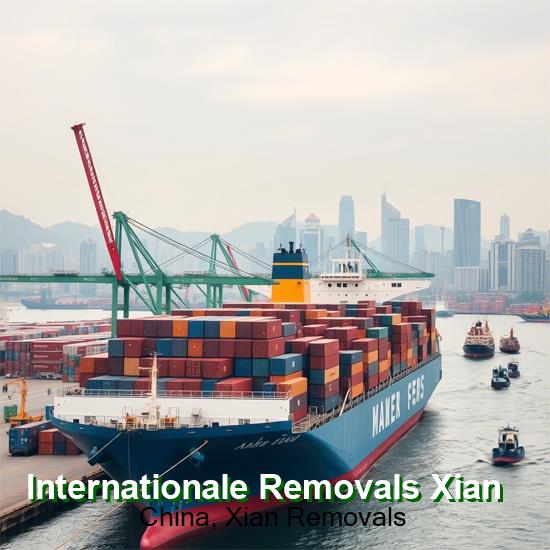
Xi'an moves more freight on the European rail services than anywhere else in China. That volume matters practically: services are frequent, the handling is routine, and capacity is generally available rather than needing to be hunted for.
The city sits roughly a thousand kilometres from the nearest useful port in any direction. A container landing at a coastal terminal faces a long domestic leg by road or rail, an extra handling stage, and the cost that goes with both. In Chongqing or Chengdu the sea route is a genuine alternative worth pricing. In Xi'an it usually is not, and a quote that offers only sea is worth questioning.
Goods arriving by rail clear inland at Xi'an. That is convenient, since your paperwork and your address are in the same city, which is not true for Beijing or for a sea routed inland move.
One planning note. Rail services are commercial operations and their schedules shift. Confirm the service is running for your window rather than assuming it, and ask what the fallback is if a departure is missed.

Xi'an divides more sharply than most Chinese cities, and the dividing line is physical.
Inside the Ming wall is the old city, a rectangle of roughly fourteen square kilometres. Vehicles enter through the gates and nowhere else. Streets are narrow, particularly around the Muslim Quarter and the lanes off it. Buildings are height limited by conservation rules, so there are few towers and few service lifts. Delivery here means a smaller vehicle, a longer carry and often a stair climb. Some addresses need the goods transferred to a van at a depot first.
There is a second constraint people rarely expect. Xi'an sits on a great deal of archaeology, and construction and excavation are restricted across much of the city. It affects new building rather than your move directly, but it explains why the housing stock is what it is.
Gaoxin, the high technology zone south west of the centre, is where most international professionals live. Planned from open ground, wide roads, modern compounds, working lifts. This is the straightforward delivery in Xi'an.
Yanta, around the Big Wild Goose Pagoda and the university belt, holds a large student and academic population. A mix of older campus housing and newer blocks, mostly manageable.
Qujiang New District in the south east is newer again, planned around the cultural sites, with good access.
Spring dust is a genuine local factor. Xi'an catches loess dust off the plateau and a windy March day is not one to have a container open on a pavement.
Rail freight sets the baseline here, which puts Xi'an above the coastal cities per cubic metre and below the other deep inland destinations, because the train does the hard part. What moves a quote is whether the address is inside the walls.
Plan for around £350 to £1,200
University staff, language students and single postings on shorter contracts.
Plan for around £1,500 to £3,700
Apartment moves into Gaoxin or Yanta, generally rail freighted.
Plan for around £3,900 to £9,000
Family postings, usually corporate and usually into the technology zone.
Tell us whether the address is inside the city wall. That single answer changes the vehicle, the crew and the day.
We match you with your vetted mover, which means one team handles everything. It is free, with no obligation. Get a relocation quote today and hold your dates.
Send your move detailsCall 07551 855 064 or +447551855064. Message us on WhatsApp.
Rail freight clears inland at Xi'an, which is one of the quieter advantages of the route. You need a valid residence permit, a full valued inventory and your passport details. A sea routed shipment clears at the coastal port instead, before the domestic leg begins.
The national rules are the same across mainland China, so the detail on permits, restricted goods and the cultural relics rule is set out in full on the China removals and shipping page. Read that before you start packing, particularly the section on items made before 1949.
Westbound rail is the obvious route out as well, and for the same reason. A container leaving Xi'an by sea travels a thousand kilometres before it reaches water. The train starts from here.
Apply for Transfer of Residence relief with HMRC before the goods move. Xi'an needs an extra word of caution on the cultural relics rule, because it sits at the centre of one of the richest archaeological regions anywhere. Replicas are sold everywhere and genuine antiquities do circulate. Anything old should be assessed and certified before it goes anywhere near a container.
A move usually means moving money too, whether that is a deposit on a Xi'an flat or funds coming back the other way. We have helped customers with currency exchange in any currency through trusted partners for many years, and our partners can help with the money side of your move. Mention it on the form and it gets included.
Experts in currency exchange
No hidden fees
5 star consumer ratings
Competitive exchange rate
Xi'an is the busiest inland rail gateway, and several of these cities are served by the same European services or by connections from them.
For the full picture on routes, sea freight, rail freight, costs and Chinese customs, start at the China shipping and moving page.
Because the city moves more China to Europe rail freight than anywhere else and sits about a thousand kilometres from the nearest useful port. Services are frequent and capacity is generally available. A sea container would face a long domestic leg and an extra handling stage on arrival.
Around four to six weeks door to door. Your goods cross to a European terminal, join the train, and arrive at the international port east of the city. That compares with roughly nine weeks for a sea routing plus the overland leg from the coast.
Not a large one. The Ming wall runs fourteen kilometres unbroken and vehicles enter the old city only through the gates. Streets inside are narrow, buildings are height limited by conservation rules and service lifts are rare. Goods are often transferred to a smaller van at a depot first.
Gaoxin, the high technology zone south west of the centre. It was planned from open ground, so roads are wide, compounds are modern and lifts work. Yanta, around the universities, is the other common choice and holds much of the academic population.
Rail freight clears inland at Xi'an, which means your paperwork and your address are in the same city. That is not true for a sea routing, which clears at the coastal port before the domestic leg begins. It is one of the quieter advantages of the train.
Winters are cold and dry rather than snowy, and summers are hot. The local factor is spring dust off the loess plateau, which can be heavy on a windy March day. It is not a reason to change your dates, but it is a reason not to leave a container open on a pavement.
They run commercially and their schedules shift, so confirm the service is operating for your window rather than assuming it. Ask what the fallback is if a departure is missed. Xi'an has more frequency than any other Chinese city on these routes, so alternatives are usually available.
A valid residence permit, a full inventory with values, and your passport details. The goods should be used personal effects arriving as one shipment within the permitted window after you enter the country. The requirements are national and do not vary by city.
Only with an export certificate, and Xi'an needs more care than most places. The region is one of the richest archaeological areas anywhere, replicas are sold everywhere and genuine antiquities do circulate. Have anything old assessed and certified well before it goes near a container.
Send your collection address, your Xi'an district, a rough idea of the volume and your date. A vetted mover from our network checks the route, the access and the paperwork, then comes back to you with the price.
Send your move detailsWe match international moving enquiries with vetted moving companies in the AGM Group network, each holding FIDI FAIM certification and BAR Overseas membership.
We are not a removal firm ourselves. We find you the one that suits your route, and you deal with them directly from there.