15
Years in international removals
850k+
Verified customer enquiries
3
FIDI-accredited partners
Trusted International Moving Network
Accredited Relocation Specialists


Wuhan is really three cities that grew into one, separated by two rivers and stitched together with bridges and tunnels. Which of the three you are moving to matters more here than the district does in most Chinese cities, because getting from one bank to another is a decision rather than a detail.
One vetted mover from our network takes the job, matched for central China coverage. The river crossings are the local knowledge that counts. A crew that picks the wrong bridge at the wrong hour loses two hours it will want paying for.
Containers reach Wuhan by barge up the Yangtze, roughly a thousand kilometres from Shanghai, arriving at the Yangluo terminal downstream of the city. Road from a coastal port is the alternative, and rail from Europe is available for suitable shipments.
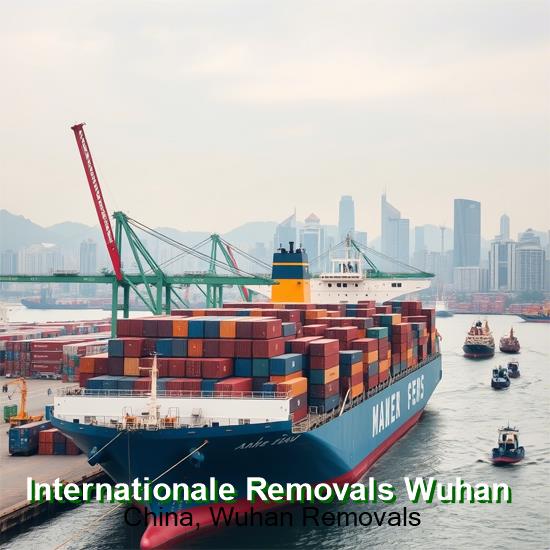
Wuhan sits where the Han river meets the Yangtze, which made it one of China's great inland trading cities long before containers existed. The river still does the work.
By barge. A container clearing at Shanghai can travel a thousand kilometres upriver to Yangluo, the container terminal downstream of the city. It is slower than the road, adding roughly a week to ten days, and cheaper for volume. For a sole use container without a fixed date it is worth pricing.
By road. The expressway from the coast is quicker and more predictable. Most quotes will offer this by default. It costs more per cubic metre than the river but removes a handling stage and a week of waiting.
By rail. European services do reach Wuhan, and for a shipment where timing matters more than cost it is the fastest of the three by a wide margin. Availability needs confirming for your window.
The choice is genuine here in a way it is not in most cities, because Wuhan has all three routes properly available. Ask for at least two of them to be priced.
The university population shapes a lot of the traffic. Wuhan holds several very large institutions with substantial international enrolment, so September and June see a heavy flow of boxes and part loads in both directions, and the local trade handles small shipments as routine work.

The three towns have quite different characters and quite different delivery problems.
Hankou, on the north west bank, was the commercial and foreign quarter. Several powers held concessions here and a good deal of what they built survives around the Jianghan Road area: handsome early twentieth century buildings on streets that were laid out for trams and carts. Access there is tight, lifts are absent in the older stock, and some blocks are protected. It is also where much of the city's older shopping and business life still sits.
Wuchang, on the east bank, holds the universities, the provincial government and East Lake. Housing runs from campus accommodation through 1990s blocks to modern towers, so access varies street by street. The Optics Valley technology zone in the east is the newest part and by some distance the easiest, with planned compounds, wide roads and working service lifts. Most international professionals live there.
Hanyang, on the south west bank, is the most industrial of the three and has newer residential development mixed among it. Access is generally straightforward.
The crossings are the thing to plan around. Bridges and tunnels carry an enormous volume of daily traffic and the peaks are heavy. A delivery from Yangluo to a Hanyang address crosses both rivers and can lose a substantial part of a morning to it. Movers who work Wuhan schedule around this without being asked.
Summer deserves repeating. Wuhan is traditionally counted among China's furnace cities and the combination of heat and humidity in July and August is genuinely punishing for a working crew.
The spread here comes from the route more than the address. A barge shipment and a rail shipment into the same flat can differ by a large margin, and neither is wrong. What you are buying with the higher figure is weeks.
Plan for around £300 to £1,200
Students and academic staff, of which Wuhan has a great many.
Plan for around £1,400 to £3,700
Apartment moves into Optics Valley or newer Wuchang stock.
Plan for around £3,800 to £9,000
Family postings, and the band where the river option is worth pricing.
Tell us which of the three towns and which month. Both change the day considerably.
We match you with your vetted mover, which means one team handles everything. It is free, with no obligation. Get a relocation quote today and hold your dates.
Send your move detailsCall 07551 855 064 or +447551855064. Message us on WhatsApp.
Where you clear depends on the route. Rail freight clears inland at Wuhan. Sea and river shipments normally clear at Shanghai before the upriver leg. Either way you need a valid residence permit, a full valued inventory and your passport details.
The national rules are the same across mainland China, so the detail on permits, restricted goods and the cultural relics rule is set out in full on the China removals and shipping page. Read that before you start packing, particularly the section on items made before 1949.
Departures cluster around the academic year more than the corporate one, so June and July are the busy window and capacity tightens. Book early if that is when you are leaving.
Apply for Transfer of Residence relief with HMRC before the goods move. Hubei has a long trade in lacquerware, bronzes and carved wood, much of it reproduction and perfectly exportable. Anything genuinely old needs assessing for the cultural relics rule, and pieces from before 1949 require an export certificate.
A move usually means moving money too, whether that is a deposit on a Wuhan flat or funds coming back the other way. We have helped customers with currency exchange in any currency through trusted partners for many years, and our partners can help with the money side of your move. Mention it on the form and it gets included.
Experts in currency exchange
No hidden fees
5 star consumer ratings
Competitive exchange rate
Central China's cities share the same three way choice between river, road and rail. Which one suits depends on how far upstream you are.
For the full picture on routes, sea freight, rail freight, costs and Chinese customs, start at the China shipping and moving page.
Three ways. A container can clear at Shanghai and travel a thousand kilometres up the Yangtze by barge to Yangluo. It can travel overland by road from a coastal port. Or it can come by rail from Europe. Wuhan is one of the few Chinese cities where all three are genuinely available.
It depends on your date. River is cheapest and slowest, adding a week to ten days over the road. Road is the predictable middle option. Rail is much the fastest and costs the most per cubic metre. Ask for at least two to be priced rather than accepting the first routing offered.
Because Wuhan is really three cities separated by two rivers, and getting between them means a bridge or a tunnel carrying heavy daily traffic. A delivery from the terminal to a Hanyang address crosses both rivers and can lose a large part of a morning. Movers who work here schedule around it.
Optics Valley, the technology zone in eastern Wuchang. It is the newest part of the city, with planned compounds, wide roads and working service lifts. It is comfortably the easiest delivery in Wuhan and where most corporate housing sits.
The older parts can be. Several foreign powers held concessions there and a good deal of what they built survives around Jianghan Road, on streets laid out for trams and carts. Lifts are absent in the older stock and some buildings are protected, so large furniture needs careful planning.
Bad enough to plan around. Wuhan is traditionally counted among China's furnace cities and July and August combine serious heat with heavy humidity. A crew delivering to an upper floor works slower, needs more breaks and charges for the extra hours. Spring and autumn are far easier.
Yes, and Wuhan sees a great many. The city holds several very large universities with substantial international enrolment, so boxes and part loads move in both directions every September and June. The local trade treats small shipments as routine rather than awkward.
Rail freight clears inland at Wuhan. Sea and river shipments normally clear at Shanghai before the upriver leg begins. Ask which applies to your booking, because it determines where the paperwork goes and how long clearance is likely to take.
Apply for Transfer of Residence relief with HMRC before anything is packed, since the reference has to be on the customs entry. Then have older pieces assessed. Hubei has a strong trade in lacquerware and bronzes, and anything from before 1949 needs an export certificate.
Send your collection address, your Wuhan district, a rough idea of the volume and your date. A vetted mover from our network checks the route, the access and the paperwork, then comes back to you with the price.
Send your move detailsWe match international moving enquiries with vetted moving companies in the AGM Group network, each holding FIDI FAIM certification and BAR Overseas membership.
We are not a removal firm ourselves. We find you the one that suits your route, and you deal with them directly from there.